
運輸和退貨
Europe, UK: Monday, Mar 2 ~
USA: Saturday, Feb 28 ~
Australia: Monday, Mar 2 ~
Asia: Sunday, Mar 1 ~
UAE: Monday, Mar 2 ~
Order within 6 Hours 21 mins with Scheduled Delivery. If you place an order within this time, We will ship Monday, Mar 2 2026. This delivery time is calculated by DHL and FedEx. You can check the exact delivery date on checkout page.
USA: Saturday, Feb 28 ~
Australia: Monday, Mar 2 ~
Asia: Sunday, Mar 1 ~
UAE: Monday, Mar 2 ~
Order within 6 Hours 21 mins with Scheduled Delivery. If you place an order within this time, We will ship Monday, Mar 2 2026. This delivery time is calculated by DHL and FedEx. You can check the exact delivery date on checkout page.
買家保護
商品非正品-全額退款。新品與商品描述不符-全額或部分退款。
顧客評價 (0 rating)
現在沒有商品評價……
商品說明 (1,822 characters)
A plastic model that requires assembly and painting. Separate tools, paint, etc. are required.
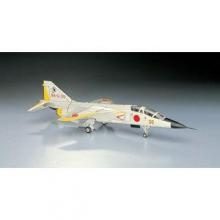
Product introduction 1/72 scale plastic model. The Mitsubishi T-2 is a supersonic trainer aircraft of the Japan Air Self-Defense Force. The aircraft outline of the T-2 is a twin-engine, twin-engine engine manufactured by British Rolls-Royce with a Turbomeca Adore Mk801A afterburner and a maximum thrust of 3,310 kg. The main wings are high-wing type clipped delta wings with a 9 degree anhedral angle to increase the flap area, and the lateral control has been changed from ailerons to spoilers. The air intake is a fixed ramp type with 6 auxiliary air intakes around it. The fixed armament is the M61A-1 Vulcan cannon, and the radar is the domestically produced J/AWG-11 radar FCS developed by Mitsubishi Electric. is not installed. As mentioned above, there were two types of T-2 trainer aircraft: the early model and the late model. Students who complete the basic piloting course in the T-33A and obtain the wing mark will enter the basic combat piloting course at Matsushima Air Base. Students will learn basic knowledge about supersonic flight and maneuvering with the early T-2. In the next combat pilot course, student pilots learned how to operate a fighter jet, including shooting, using a late model T-2 equipped with radar and a Vulcan cannon, and student pilots who graduated from this course were assigned to various combat units. The T-2, which was deployed to Matsushima Air Base in 1975, has been used for student training for nearly 30 years, but was replaced by the F-2B in 2004 and retired from training flights. The T-2 late model was used by the Flight Instruction Corps (Aggressor) from 1981 to 1990. (From Discovery Japan Mall) Safety Warning Not applicable
Product introduction 1/72 scale plastic model. The Mitsubishi T-2 is a supersonic trainer aircraft of the Japan Air Self-Defense Force. The aircraft outline of the T-2 is a twin-engine, twin-engine engine manufactured by British Rolls-Royce with a Turbomeca Adore Mk801A afterburner and a maximum thrust of 3,310 kg. The main wings are high-wing type clipped delta wings with a 9 degree anhedral angle to increase the flap area, and the lateral control has been changed from ailerons to spoilers. The air intake is a fixed ramp type with 6 auxiliary air intakes around it. The fixed armament is the M61A-1 Vulcan cannon, and the radar is the domestically produced J/AWG-11 radar FCS developed by Mitsubishi Electric. is not installed. As mentioned above, there were two types of T-2 trainer aircraft: the early model and the late model. Students who complete the basic piloting course in the T-33A and obtain the wing mark will enter the basic combat piloting course at Matsushima Air Base. Students will learn basic knowledge about supersonic flight and maneuvering with the early T-2. In the next combat pilot course, student pilots learned how to operate a fighter jet, including shooting, using a late model T-2 equipped with radar and a Vulcan cannon, and student pilots who graduated from this course were assigned to various combat units. The T-2, which was deployed to Matsushima Air Base in 1975, has been used for student training for nearly 30 years, but was replaced by the F-2B in 2004 and retired from training flights. The T-2 late model was used by the Flight Instruction Corps (Aggressor) from 1981 to 1990. (From Discovery Japan Mall) Safety Warning Not applicable