
Envío y devoluciones
Europe, UK: Monday, Mar 2 ~
USA: Saturday, Feb 28 ~
Australia: Monday, Mar 2 ~
Asia: Sunday, Mar 1 ~
UAE: Monday, Mar 2 ~
Order within 4 Hours 55 mins with Scheduled Delivery. If you place an order within this time, We will ship Monday, Mar 2 2026. This delivery time is calculated by DHL and FedEx. You can check the exact delivery date on checkout page.
USA: Saturday, Feb 28 ~
Australia: Monday, Mar 2 ~
Asia: Sunday, Mar 1 ~
UAE: Monday, Mar 2 ~
Order within 4 Hours 55 mins with Scheduled Delivery. If you place an order within this time, We will ship Monday, Mar 2 2026. This delivery time is calculated by DHL and FedEx. You can check the exact delivery date on checkout page.
protección al comprador
Reembolso total si no es original. Para artículos nuevos, reembolso total o parcial si no encaja con la descripción
Opinión (0 rating)
No hay opiniones para este artículo...
Descripción (1,822 characters)
A plastic model that requires assembly and painting. Separate tools, paint, etc. are required.
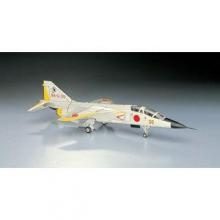
Product introduction 1/72 scale plastic model. The Mitsubishi T-2 is a supersonic trainer aircraft of the Japan Air Self-Defense Force. The aircraft outline of the T-2 is a twin-engine, twin-engine engine manufactured by British Rolls-Royce with a Turbomeca Adore Mk801A afterburner and a maximum thrust of 3,310 kg. The main wings are high-wing type clipped delta wings with a 9 degree anhedral angle to increase the flap area, and the lateral control has been changed from ailerons to spoilers. The air intake is a fixed ramp type with 6 auxiliary air intakes around it. The fixed armament is the M61A-1 Vulcan cannon, and the radar is the domestically produced J/AWG-11 radar FCS developed by Mitsubishi Electric. is not installed. As mentioned above, there were two types of T-2 trainer aircraft: the early model and the late model. Students who complete the basic piloting course in the T-33A and obtain the wing mark will enter the basic combat piloting course at Matsushima Air Base. Students will learn basic knowledge about supersonic flight and maneuvering with the early T-2. In the next combat pilot course, student pilots learned how to operate a fighter jet, including shooting, using a late model T-2 equipped with radar and a Vulcan cannon, and student pilots who graduated from this course were assigned to various combat units. The T-2, which was deployed to Matsushima Air Base in 1975, has been used for student training for nearly 30 years, but was replaced by the F-2B in 2004 and retired from training flights. The T-2 late model was used by the Flight Instruction Corps (Aggressor) from 1981 to 1990. (From Discovery Japan Mall) Safety Warning Not applicable
Product introduction 1/72 scale plastic model. The Mitsubishi T-2 is a supersonic trainer aircraft of the Japan Air Self-Defense Force. The aircraft outline of the T-2 is a twin-engine, twin-engine engine manufactured by British Rolls-Royce with a Turbomeca Adore Mk801A afterburner and a maximum thrust of 3,310 kg. The main wings are high-wing type clipped delta wings with a 9 degree anhedral angle to increase the flap area, and the lateral control has been changed from ailerons to spoilers. The air intake is a fixed ramp type with 6 auxiliary air intakes around it. The fixed armament is the M61A-1 Vulcan cannon, and the radar is the domestically produced J/AWG-11 radar FCS developed by Mitsubishi Electric. is not installed. As mentioned above, there were two types of T-2 trainer aircraft: the early model and the late model. Students who complete the basic piloting course in the T-33A and obtain the wing mark will enter the basic combat piloting course at Matsushima Air Base. Students will learn basic knowledge about supersonic flight and maneuvering with the early T-2. In the next combat pilot course, student pilots learned how to operate a fighter jet, including shooting, using a late model T-2 equipped with radar and a Vulcan cannon, and student pilots who graduated from this course were assigned to various combat units. The T-2, which was deployed to Matsushima Air Base in 1975, has been used for student training for nearly 30 years, but was replaced by the F-2B in 2004 and retired from training flights. The T-2 late model was used by the Flight Instruction Corps (Aggressor) from 1981 to 1990. (From Discovery Japan Mall) Safety Warning Not applicable