
Shipping and Returns
Europe, UK: Monday, Mar 2 ~
USA: Saturday, Feb 28 ~
Australia: Monday, Mar 2 ~
Asia: Sunday, Mar 1 ~
UAE: Monday, Mar 2 ~
Order within 6 Hours 21 mins with Scheduled Delivery. If you place an order within this time, We will ship Monday, Mar 2 2026. This delivery time is calculated by DHL and FedEx. You can check the exact delivery date on checkout page.
USA: Saturday, Feb 28 ~
Australia: Monday, Mar 2 ~
Asia: Sunday, Mar 1 ~
UAE: Monday, Mar 2 ~
Order within 6 Hours 21 mins with Scheduled Delivery. If you place an order within this time, We will ship Monday, Mar 2 2026. This delivery time is calculated by DHL and FedEx. You can check the exact delivery date on checkout page.
Buyer Protection
Full refund if not genuine. Full or partial refund, if the new item is not as described.
Customer Reviews (0 rating)
No reviews on this item...
Description (3,387 characters)
Released in October 2021
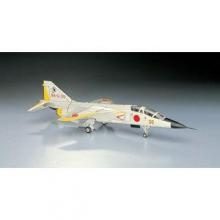
HASEGAWA 1/72 Aircraft Series Mitsubishi T-2. HC4T2 Released in October 2021
[Product Introduction]
HASEGAWA 1/72 Aircraft Series Mitsubishi T-2. The Mitsubishi T-2 is a supersonic trainer aircraft of the Japan Air Self-Defense Force. At that time, the Air Self-Defense Force was deploying the F-104J and deciding to introduce the F-4EJ, and aircraft with significantly superior flight performance compared to the previous F-86F were becoming mainstream. For this reason, the training of the pilots flying them became a problem. For this reason, the Japan Air Self-Defense Force has decided to introduce a new supersonic jet trainer. Initially, it was considered whether the T-38, which was used by the US Air Force at the time, would be newly developed domestically, but it was decided to develop it domestically. The Defense Agency's Technical Research Headquarters submitted specifications to domestic aircraft manufacturers, and in September 1967, the X-T project began with Mitsubishi Heavy Industries as the main contractor, and other companies also cooperating in production. The X-T project is a twin-engine trainer aircraft plan for re-seating, but one of its major features was the ability to simultaneously develop into a support fighter (FS-X) from the beginning. The first prototype of the XT-2 project was completed in March 1968, and the mock-up was completed in April 1969. The first prototype was then rolled out on April 23, 1971, and made its first flight on July 20 of the same year. The aircraft outline of the T-2 is a twin-engine, twin-engine engine manufactured by British Rolls-Royce with a Turbomeca Adore Mk801A afterburner and a maximum thrust of 3310 kg. The main wing is a high-wing type, clipped delta wing with an anhedral angle of 9 degrees, and the most distinctive feature is that the lateral control has been replaced with a spoiler instead of an aileron. This is in consideration of the large area of the main wing flap. The air intake, which is one of the challenges of supersonic aircraft, is a fixed ramp type with six auxiliary air intakes around it. Fixed armament is equipped with the M61A-1 Vulcan gun. In addition, the onboard radar is equipped with the domestically produced J/AWG-11 radar FCS developed by Mitsubishi Electric, but these are not installed on the early model T-2 used in the basic fighter pilot course. As mentioned above, there were two types of T-2 trainer aircraft: the early model and the late model. Students who complete the basic piloting course in the T-33A and obtain the wing mark will enter the basic combat piloting course at Matsushima Air Base. The early model of the T-2 will be used at this time, and students will learn basic knowledge about supersonic flight and maneuvering with the T-2. Students who complete this move on to the next combat pilot course. The T-2 late model used at this time was equipped with a radar and Vulcan gun, and the student pilots learned how to operate and operate fighter aircraft such as shooting, and student pilots who graduated from this were assigned to various combat units. The T-2, which was deployed to Matsushima Air Base in 1975, has been used for student training for nearly 30 years, but was replaced by the F-2B in 2004 and retired from training flights.
[Product specifications]
1/72 scale unpainted assembly kit□
HASEGAWA 1/72 Aircraft Series Mitsubishi T-2. HC4T2 Released in October 2021
[Product Introduction]
HASEGAWA 1/72 Aircraft Series Mitsubishi T-2. The Mitsubishi T-2 is a supersonic trainer aircraft of the Japan Air Self-Defense Force. At that time, the Air Self-Defense Force was deploying the F-104J and deciding to introduce the F-4EJ, and aircraft with significantly superior flight performance compared to the previous F-86F were becoming mainstream. For this reason, the training of the pilots flying them became a problem. For this reason, the Japan Air Self-Defense Force has decided to introduce a new supersonic jet trainer. Initially, it was considered whether the T-38, which was used by the US Air Force at the time, would be newly developed domestically, but it was decided to develop it domestically. The Defense Agency's Technical Research Headquarters submitted specifications to domestic aircraft manufacturers, and in September 1967, the X-T project began with Mitsubishi Heavy Industries as the main contractor, and other companies also cooperating in production. The X-T project is a twin-engine trainer aircraft plan for re-seating, but one of its major features was the ability to simultaneously develop into a support fighter (FS-X) from the beginning. The first prototype of the XT-2 project was completed in March 1968, and the mock-up was completed in April 1969. The first prototype was then rolled out on April 23, 1971, and made its first flight on July 20 of the same year. The aircraft outline of the T-2 is a twin-engine, twin-engine engine manufactured by British Rolls-Royce with a Turbomeca Adore Mk801A afterburner and a maximum thrust of 3310 kg. The main wing is a high-wing type, clipped delta wing with an anhedral angle of 9 degrees, and the most distinctive feature is that the lateral control has been replaced with a spoiler instead of an aileron. This is in consideration of the large area of the main wing flap. The air intake, which is one of the challenges of supersonic aircraft, is a fixed ramp type with six auxiliary air intakes around it. Fixed armament is equipped with the M61A-1 Vulcan gun. In addition, the onboard radar is equipped with the domestically produced J/AWG-11 radar FCS developed by Mitsubishi Electric, but these are not installed on the early model T-2 used in the basic fighter pilot course. As mentioned above, there were two types of T-2 trainer aircraft: the early model and the late model. Students who complete the basic piloting course in the T-33A and obtain the wing mark will enter the basic combat piloting course at Matsushima Air Base. The early model of the T-2 will be used at this time, and students will learn basic knowledge about supersonic flight and maneuvering with the T-2. Students who complete this move on to the next combat pilot course. The T-2 late model used at this time was equipped with a radar and Vulcan gun, and the student pilots learned how to operate and operate fighter aircraft such as shooting, and student pilots who graduated from this were assigned to various combat units. The T-2, which was deployed to Matsushima Air Base in 1975, has been used for student training for nearly 30 years, but was replaced by the F-2B in 2004 and retired from training flights.
[Product specifications]
1/72 scale unpainted assembly kit□