
運輸和退貨
Europe, UK: Monday, Jan 19 ~
USA: Friday, Jan 16 ~
Australia: Sunday, Jan 18 ~
Asia: Saturday, Jan 17 ~
UAE: Sunday, Jan 18 ~
Order within 0 Hours 16 mins with Scheduled Delivery. If you place an order within this time, We will ship Friday, Jan 16 2026. This delivery time is calculated by DHL and FedEx. You can check the exact delivery date on checkout page.
USA: Friday, Jan 16 ~
Australia: Sunday, Jan 18 ~
Asia: Saturday, Jan 17 ~
UAE: Sunday, Jan 18 ~
Order within 0 Hours 16 mins with Scheduled Delivery. If you place an order within this time, We will ship Friday, Jan 16 2026. This delivery time is calculated by DHL and FedEx. You can check the exact delivery date on checkout page.
買家保護
商品非正品-全額退款。新品與商品描述不符-全額或部分退款。
顧客評價 (0 rating)
現在沒有商品評價……
商品說明 (6,983 characters)
Active
・Transformer
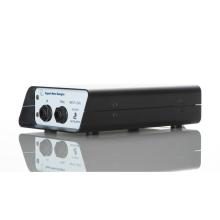
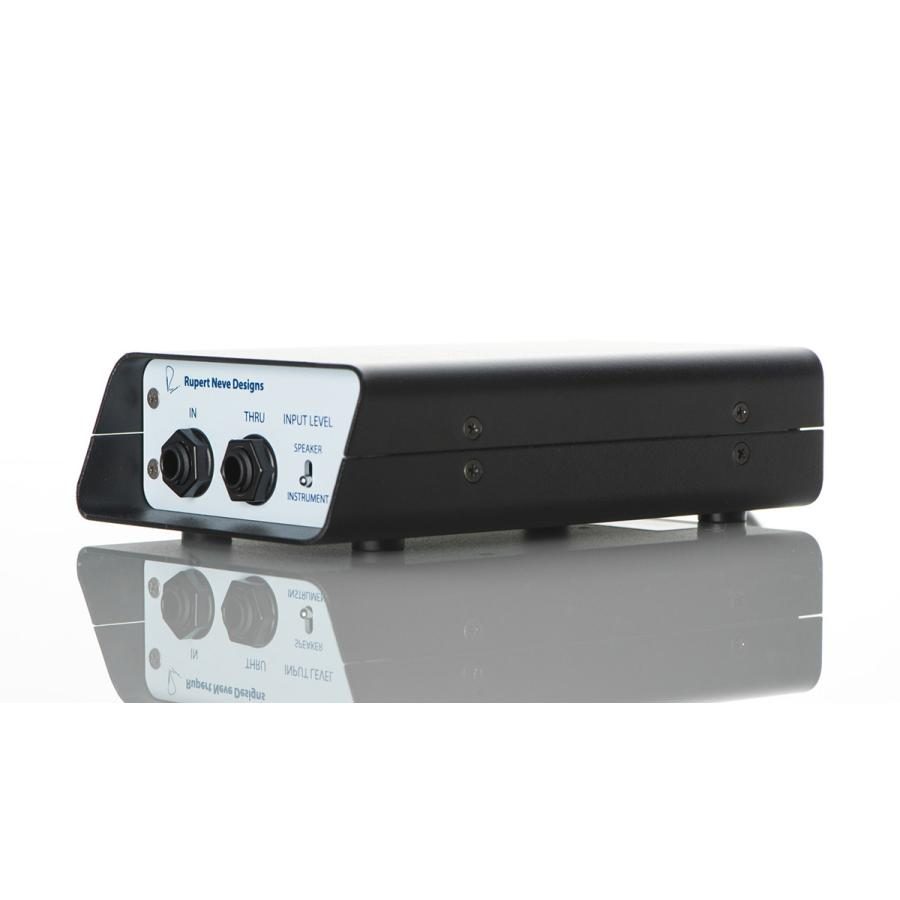
・DIRNDI is a DI box with Rupert Neve's signature sound, featuring a custom-designed transformer and Class A discrete FET amplifier. These key elements are carefully balanced to deliver a direct sound full of character and vitality—transmitting every harmonic and depth from guitars, basses, acoustic instruments, and even professional line-level sources. Portable yet powerful, RNDI truly brings out the unique sound of your instrument and amplifier—making it the first DI box truly worthy of the "Rupert Neve" name.
※Active transformer DI Listening page (external site) Features Active
・Transformer
・DIRNDI is a DI box with Rupert Neve's signature sound, featuring a custom-designed transformer and Class A discrete FET amplifier. The careful balance of these key elements results in a direct sound bursting with character and vitality—transmitting every harmonic and depth from guitars, basses, and acoustic instruments to professional line-level sources. Portable, powerful, and able to enhance the sound of each instrument and amplifier, the RNDI is the first DI box truly worthy of the Rupert Neve name. Development Background: Unsatisfied with the performance of even the most prestigious high-end DIs, Rupert Neve embarked on a DI design using a newly designed transformer to deliver the full tone and vitality of instruments. After repeated adjustments, the RNDI was finally completed. Its low frequencies are rich and deep, while its high frequencies are incredibly clear and free of any unpleasant impurities. The most important point in the development was to "think from the musician's perspective and create a DI that inspires and inspires you to play with confidence." The RNDI's distinctive sound is achieved through a newly designed transformer and a discrete FET amplifier with Class A technology. These carefully balanced amplifiers deliver the RNDI's key characteristics and vibrant, direct sound. The transformer provides superior separation, musical harmonic content, and depth. The low-impedance balanced output transformer minimizes signal loss between devices, even when long cable runs are used. This is crucial for live performances and studios, as it prevents unwanted signal crosstalk even when running cables up to 30 meters to the amplifier, allowing for worry-free amplification. The amplifier is also designed to prevent high-frequency loss caused by high-capacitance cables. As a result, the RNDI minimizes output signal loss, even over long cable runs. The RNDI's Class A discrete FET amplifier is powered by industry-standard 48V phantom power (power is supplied to the RNDI via the XLR connector). The RNDI's ultra-high 2 MΩ input impedance allows for lossless direct connection of a wide variety of instruments. The RNDI's Class A design eliminates crossover distortion, allowing for natural, musically relevant even harmonics. This is particularly evident in the presence of second-order harmonics (octaves above) and third-order harmonics (fifths above). These subtle yet deeply musical harmonics enrich the sound. The RNDI's discrete design eliminates the use of IC chips or digital processing, completely eliminating any negative influences on tone. The benefits of the FET amplifier and transformer architecture are immeasurable, most notably the RNDI's exceptionally balanced characteristics. The low end is thick and powerful, projecting even sounds several octaves below. The high frequencies are clear, present, and smooth, extending beyond 100 kHz. And its unparalleled phase response keeps the sound as natural as possible, which is crucial when mixing direct and mic'd sounds from a single source. As you can see, this is why the RNDI is unmatched. Massive Headroom: The RNDI's Instrument mode boasts an impressive +21.5 dBu headroom, allowing it to accept the outputs of not only analog instruments but also synthesizers, drum machines, CD players, audio interfaces, and more, without the need for a pad (attenuator). This means you can use the RNDI as a "re-preamp," meaning you can run your recorded tracks through an external preamp to improve their sound. By connecting the channel outputs of your interface to the RNDI and the output of the RNDI to your preamp (an XLR input with +48V phantom power), you can adjust the signal coming from your interface to the correct level for processing by your preamp. In Speaker mode, the RNDI can directly receive 1000 W (92 Vrms or 266 Vp-p) of power amp output. This means that all of the elements that shape the tone of an instrument amp, including the preamp, EQ, insert, and speaker output, are converted. This eliminates unwanted speaker and microphone artifacts in live environments. Furthermore, by processing this signal with a speaker emulation plug-in, you can create a sound that combines the charm of an actual analog amp with the flexibility of digital modeling. Important Notes for Speaker and Instrument Modes: When used in Speaker mode, the RNDI converts a signal that includes both preamp and power amp elements. Always set the RNDI to Speaker mode and connect the RNDI to a speaker before turning on the amplifier. Note: The speaker output must always be connected to a speaker, especially if the tube amplifier does not have special features. Failure to do so will not only reduce the amplifier's performance but also shorten the life of the tube amplifier (especially the power amp section). While this is generally not necessary with solid-state (transistor or digital) amplifiers, always consult your amplifier's manual. The RNDI can accept up to 1000W of power, so it can be connected to any amplifier up to 1000W. In Instrument mode, the RNDI converts the impedance of your instrument signal, converting unbalanced signals to a balanced output. It then sends a buffered signal to a microphone preamp. It also has a Thru jack that distributes your instrument signal to an amplifier. For best results, we recommend using high-quality cables and microphone preamps to maximize your instrument's output. Connect your instrument's output to the RNDI's input and the Thru jack to your amplifier's input. Then, connect the RNDI's output (whether in Instrument or Speaker mode) to the preamp's input and adjust the gain accordingly. Maximum Input Level: +21 dBu Typical @ Instrument Mode: +41.5 dBu, 92 Vrms (266 Vp-p) @ Speaker Mode Maximum Output Level: +11.5 dBu @ Maximum Input Level Input Impedance: 2.2 MΩ @ Instrument Mode; 200 kΩ @ Speaker Mode Output Impedance: 40 Ω or less Frequency Response: ±0.25 dB @ 25 Hz - 44 kHz ±1 dB @ 12.5 Hz - 63 kHz -3 dBu @ 92 kHz Noise Level (Measured at Main Out, Un-weighted, 22 Hz - 22 kHz, 150-10 kΩ): 110 dBu or less THD+N (Total Harmonic Distortion): 0.25% or less @ 1 kHz, +20 dBu Input (2nd and 3rd Harmonics): 0.015% or less @ 1 kHz, -20 dBu Input (2nd and 3rd harmonics): 0.75% or less @ 20 Hz, -20 dBu Input (2nd and 3rd harmonics): 4.5mA @ +48V DC phantom power
・Transformer
・DIRNDI is a DI box with Rupert Neve's signature sound, featuring a custom-designed transformer and Class A discrete FET amplifier. These key elements are carefully balanced to deliver a direct sound full of character and vitality—transmitting every harmonic and depth from guitars, basses, acoustic instruments, and even professional line-level sources. Portable yet powerful, RNDI truly brings out the unique sound of your instrument and amplifier—making it the first DI box truly worthy of the "Rupert Neve" name.
※Active transformer DI Listening page (external site) Features Active
・Transformer
・DIRNDI is a DI box with Rupert Neve's signature sound, featuring a custom-designed transformer and Class A discrete FET amplifier. The careful balance of these key elements results in a direct sound bursting with character and vitality—transmitting every harmonic and depth from guitars, basses, and acoustic instruments to professional line-level sources. Portable, powerful, and able to enhance the sound of each instrument and amplifier, the RNDI is the first DI box truly worthy of the Rupert Neve name. Development Background: Unsatisfied with the performance of even the most prestigious high-end DIs, Rupert Neve embarked on a DI design using a newly designed transformer to deliver the full tone and vitality of instruments. After repeated adjustments, the RNDI was finally completed. Its low frequencies are rich and deep, while its high frequencies are incredibly clear and free of any unpleasant impurities. The most important point in the development was to "think from the musician's perspective and create a DI that inspires and inspires you to play with confidence." The RNDI's distinctive sound is achieved through a newly designed transformer and a discrete FET amplifier with Class A technology. These carefully balanced amplifiers deliver the RNDI's key characteristics and vibrant, direct sound. The transformer provides superior separation, musical harmonic content, and depth. The low-impedance balanced output transformer minimizes signal loss between devices, even when long cable runs are used. This is crucial for live performances and studios, as it prevents unwanted signal crosstalk even when running cables up to 30 meters to the amplifier, allowing for worry-free amplification. The amplifier is also designed to prevent high-frequency loss caused by high-capacitance cables. As a result, the RNDI minimizes output signal loss, even over long cable runs. The RNDI's Class A discrete FET amplifier is powered by industry-standard 48V phantom power (power is supplied to the RNDI via the XLR connector). The RNDI's ultra-high 2 MΩ input impedance allows for lossless direct connection of a wide variety of instruments. The RNDI's Class A design eliminates crossover distortion, allowing for natural, musically relevant even harmonics. This is particularly evident in the presence of second-order harmonics (octaves above) and third-order harmonics (fifths above). These subtle yet deeply musical harmonics enrich the sound. The RNDI's discrete design eliminates the use of IC chips or digital processing, completely eliminating any negative influences on tone. The benefits of the FET amplifier and transformer architecture are immeasurable, most notably the RNDI's exceptionally balanced characteristics. The low end is thick and powerful, projecting even sounds several octaves below. The high frequencies are clear, present, and smooth, extending beyond 100 kHz. And its unparalleled phase response keeps the sound as natural as possible, which is crucial when mixing direct and mic'd sounds from a single source. As you can see, this is why the RNDI is unmatched. Massive Headroom: The RNDI's Instrument mode boasts an impressive +21.5 dBu headroom, allowing it to accept the outputs of not only analog instruments but also synthesizers, drum machines, CD players, audio interfaces, and more, without the need for a pad (attenuator). This means you can use the RNDI as a "re-preamp," meaning you can run your recorded tracks through an external preamp to improve their sound. By connecting the channel outputs of your interface to the RNDI and the output of the RNDI to your preamp (an XLR input with +48V phantom power), you can adjust the signal coming from your interface to the correct level for processing by your preamp. In Speaker mode, the RNDI can directly receive 1000 W (92 Vrms or 266 Vp-p) of power amp output. This means that all of the elements that shape the tone of an instrument amp, including the preamp, EQ, insert, and speaker output, are converted. This eliminates unwanted speaker and microphone artifacts in live environments. Furthermore, by processing this signal with a speaker emulation plug-in, you can create a sound that combines the charm of an actual analog amp with the flexibility of digital modeling. Important Notes for Speaker and Instrument Modes: When used in Speaker mode, the RNDI converts a signal that includes both preamp and power amp elements. Always set the RNDI to Speaker mode and connect the RNDI to a speaker before turning on the amplifier. Note: The speaker output must always be connected to a speaker, especially if the tube amplifier does not have special features. Failure to do so will not only reduce the amplifier's performance but also shorten the life of the tube amplifier (especially the power amp section). While this is generally not necessary with solid-state (transistor or digital) amplifiers, always consult your amplifier's manual. The RNDI can accept up to 1000W of power, so it can be connected to any amplifier up to 1000W. In Instrument mode, the RNDI converts the impedance of your instrument signal, converting unbalanced signals to a balanced output. It then sends a buffered signal to a microphone preamp. It also has a Thru jack that distributes your instrument signal to an amplifier. For best results, we recommend using high-quality cables and microphone preamps to maximize your instrument's output. Connect your instrument's output to the RNDI's input and the Thru jack to your amplifier's input. Then, connect the RNDI's output (whether in Instrument or Speaker mode) to the preamp's input and adjust the gain accordingly. Maximum Input Level: +21 dBu Typical @ Instrument Mode: +41.5 dBu, 92 Vrms (266 Vp-p) @ Speaker Mode Maximum Output Level: +11.5 dBu @ Maximum Input Level Input Impedance: 2.2 MΩ @ Instrument Mode; 200 kΩ @ Speaker Mode Output Impedance: 40 Ω or less Frequency Response: ±0.25 dB @ 25 Hz - 44 kHz ±1 dB @ 12.5 Hz - 63 kHz -3 dBu @ 92 kHz Noise Level (Measured at Main Out, Un-weighted, 22 Hz - 22 kHz, 150-10 kΩ): 110 dBu or less THD+N (Total Harmonic Distortion): 0.25% or less @ 1 kHz, +20 dBu Input (2nd and 3rd Harmonics): 0.015% or less @ 1 kHz, -20 dBu Input (2nd and 3rd harmonics): 0.75% or less @ 20 Hz, -20 dBu Input (2nd and 3rd harmonics): 4.5mA @ +48V DC phantom power